Buying well · 11 of 11
Condensation on windows: what it tells you
Condensation inside on the room face means humid air meeting cold glass, which is a ventilation issue rather than a faulty window. Condensation between the panes means the sealed unit has failed. Condensation outside on the glass means the window is insulating well and is nothing to worry about.
Three different kinds of condensation get confused with each other constantly, and only one of them means anything is actually wrong with the window.
Inside, on the room side
Warm humid air hits cold glass and the moisture drops out. Common in bedrooms overnight and in kitchens and bathrooms. It is about humidity and ventilation, not a defect.
New windows can make it more noticeable rather than less, because sealing the house removes the uncontrolled leakage that used to carry moisture away. That is why trickle vents are now required on most replacements.
- Use extractor fans and keep them running after showering and cooking.
- Open trickle vents rather than taping them shut.
- Dry washing outside or in a vented tumble dryer where you can.
- Keep furniture slightly off external walls so air can move.
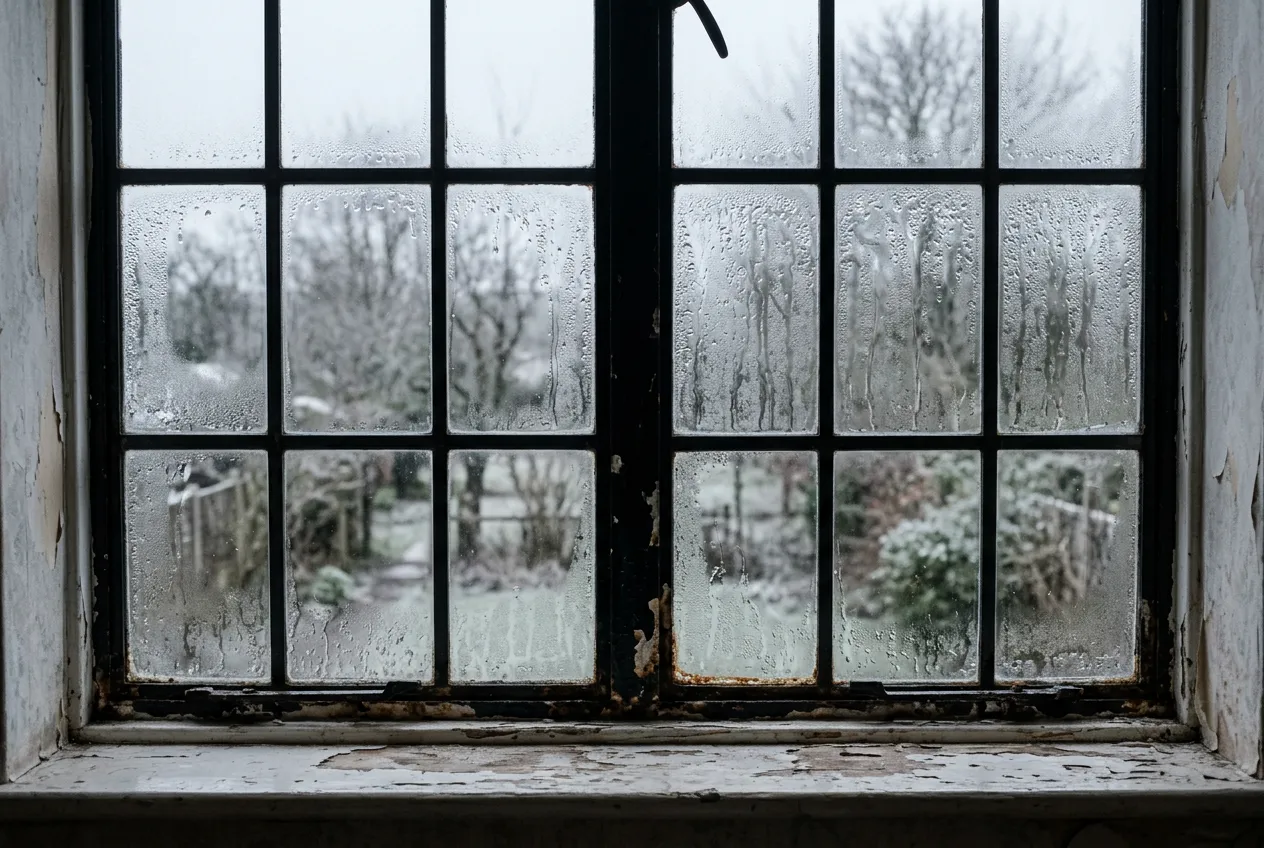
Before
Condensation running down single glazing on a cold morning: the glass is below the dew point.
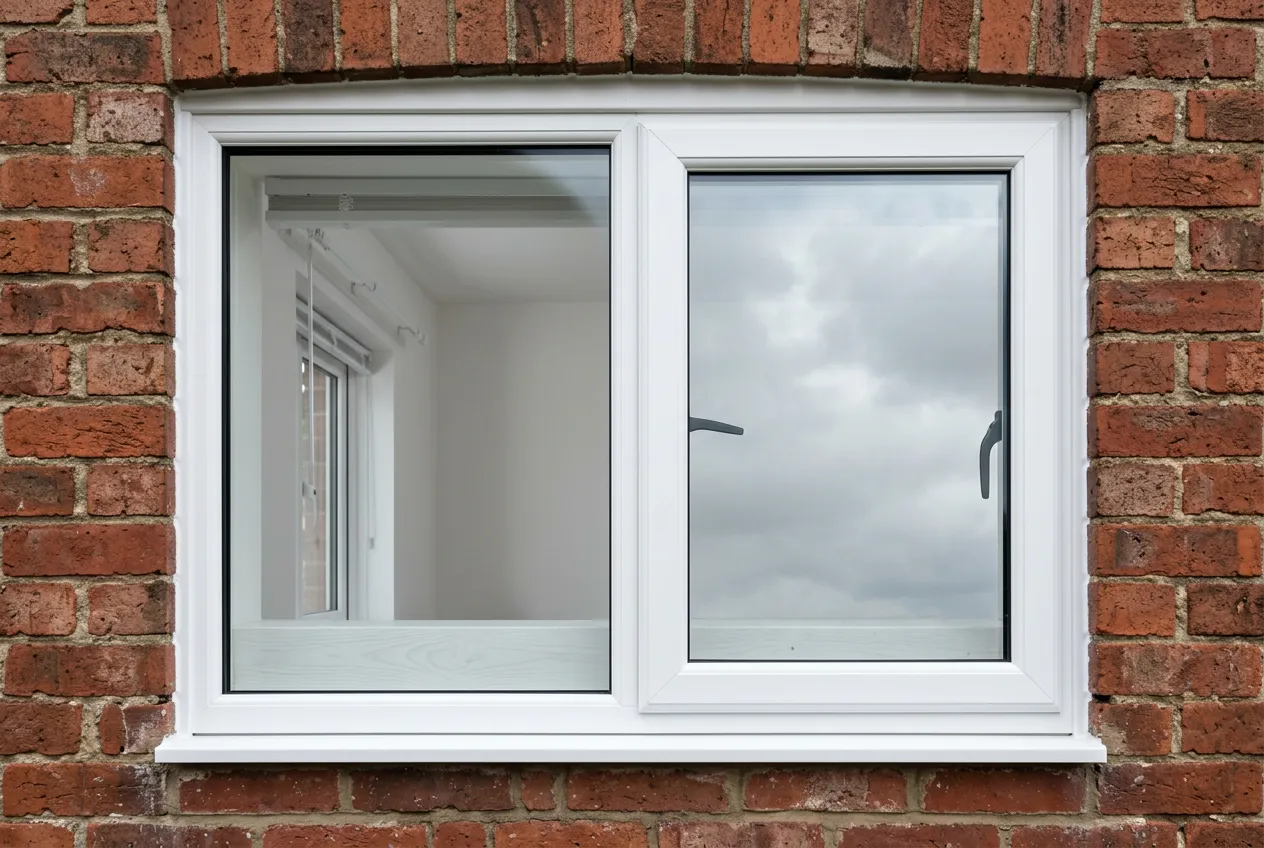
After
A modern insulated unit keeps the inner pane warmer, so the room air no longer condenses on it.
Between the panes
This one is a fault. Moisture inside the sealed unit means the perimeter seal has failed and the desiccant is saturated. You cannot wipe it off because it is sealed inside.
If the frames are sound, replacing the glass unit alone is usually the fix. See misted double glazing for what that involves and when the whole window genuinely needs replacing.
Outside, on the external face
Counter-intuitively, this is a good sign. It happens on clear still nights when the outer pane drops below the dew point of the outside air, and it means so little heat is escaping through the window that the outer glass stays cold.
It clears as the sun comes up. Nothing is wrong, and it tends to appear on exactly the windows that are performing best.
Questions
- My new windows have more condensation than the old ones. Why?
- Almost always because the house is now sealed where it used to leak. The moisture was always being produced; it previously escaped through gaps. Ventilation is the answer rather than the windows being faulty.
- Does condensation cause mould?
- Persistent condensation on frames and reveals can lead to mould, which is why it is worth addressing rather than just wiping. Ventilation and keeping the surfaces warmer are the two levers.
- Will triple glazing stop condensation?
- It raises the internal glass temperature, so condensation on the glass is less likely. It does not reduce the humidity in the room, so the underlying ventilation issue remains.
Note This guide is general information about England and Wales, not advice about your specific property. TrustedGlazing is an introducer and does not install, survey or quote. Rely on your installer's survey and your local authority for decisions about your own home.